Quick Answer
Parents find time to work out by making fitness fit around family life rather than waiting for the perfect time to exercise. Most successful parents focus on two to three structured workouts per week, plan training into their schedule, stay active throughout the day and accept that consistency is far more important than perfection.
Key Takeaways
If you’re a busy parent, you don’t need to train every day to get results. Instead:
- Schedule your workouts like important appointments.
- Aim for two to three strength training sessions each week.
- Stop waiting for the perfect time to start.
- Accept that some weeks will be better than others.
- Focus on building habits you can maintain around family life.
The goal isn’t to become the fittest person in the room. It’s to become a healthier, happier parent with more energy for your family.
Why Finding Time Feels So Difficult
If you’re a parent, you’ve probably said one of these things before:
“I just don’t have time.”
“The kids always come first.”
“I’ll start again when life calms down.”
The reality is that being a parent is one of the busiest and most demanding jobs there is.
Between school runs, nursery drop-offs, work commitments, cooking, bedtime routines and everything else that comes with family life, it’s easy for your own health to slip to the bottom of the priority list.
The problem isn’t that parents don’t care about their health.
It’s that they often believe fitness has to take over their life.
The good news is that it doesn’t.
You don’t need hours in the gym every day.
You need a realistic plan that works around your family, not against it.
Why Do Parents Struggle to Find Time to Exercise?
For most parents, the challenge isn’t motivation.
It’s capacity.
Every day feels like a balancing act between:
- Work
- Childcare
- Household jobs
- Family commitments
- Trying to get enough sleep
By the time you’ve finished everything else, exercising often feels impossible.
That’s why many parents fall into an all-or-nothing mindset.
They think:
“If I can’t train five days a week, there’s no point.”
Nothing could be further from the truth.
Do Parents Really Need to Train Every Day?
No.
In fact, for most parents, trying to train every day is one of the quickest ways to become overwhelmed.
For the majority of busy adults, two to three well-structured strength training sessions each week are enough to:
- Lose body fat
- Build strength
- Improve fitness
- Increase energy
- Support long-term health
The key is making those sessions count.
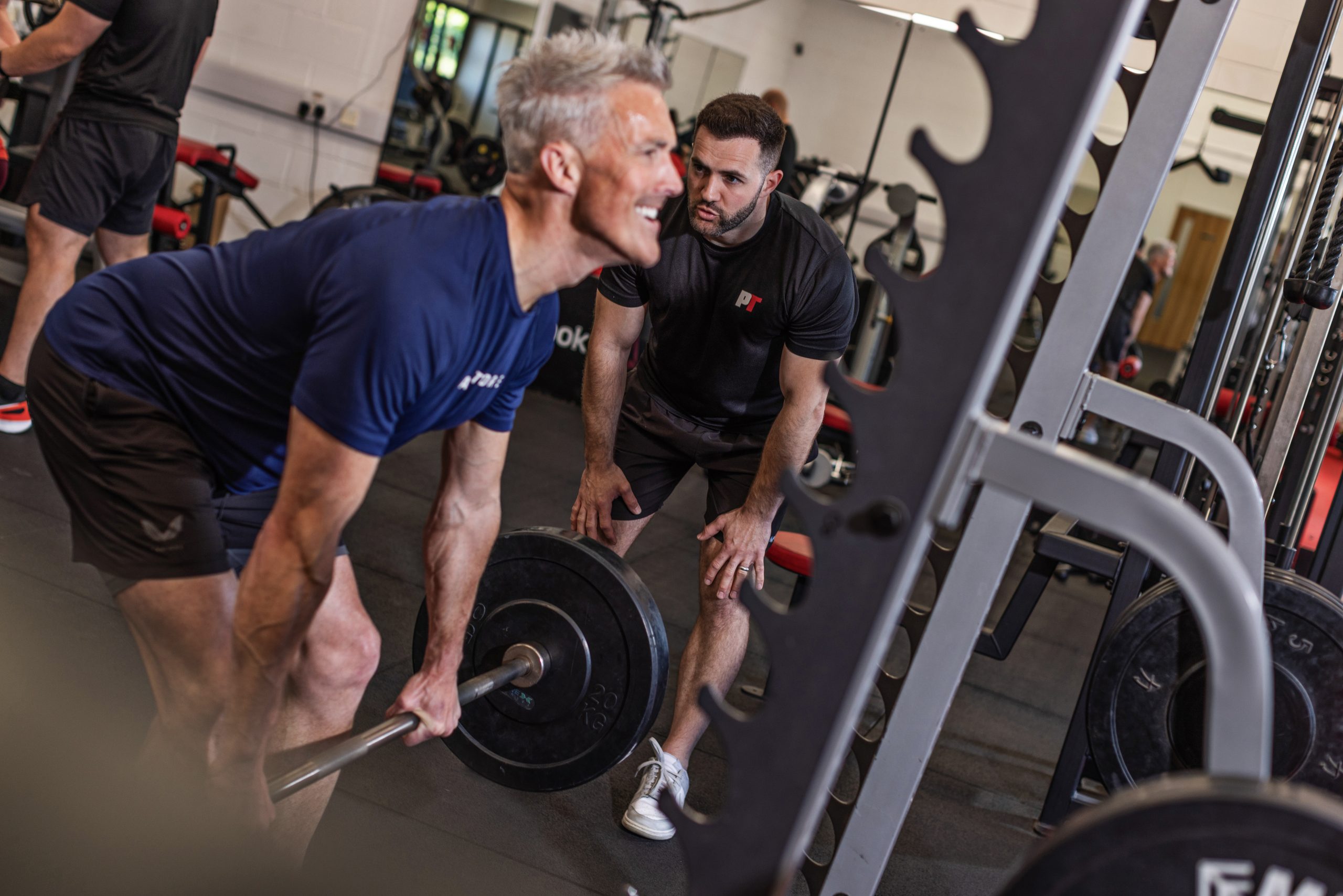
Structured personal training in Milton Keynes helps many parents maximise their limited time by following a clear plan rather than wasting half the session deciding what to do.
Why Looking After Yourself Isn’t Selfish
This is one of the biggest mindset shifts parents need to make.
Many mums and dads feel guilty taking time for themselves.
But looking after your health isn’t taking something away from your family.
It’s investing in them.
When you’re healthier, you often have:
- More energy
- Greater patience
- Better mood
- Improved confidence
- More ability to keep up with your children
Your children don’t just benefit from what you say.
They benefit from what they see.
When they grow up watching you prioritise your health, they learn that exercise and looking after yourself are normal parts of life.
Schedule Your Workouts Like Any Other Commitment
One of the biggest mistakes parents make is trying to “find time” to exercise.
The truth is:
You rarely find time.
You make it.
Think about your diary.
School runs happen because they’re scheduled.
Work meetings happen because they’re scheduled.
Parents’ evenings happen because they’re scheduled.
Treat your workouts the same way.
Put them in your calendar and protect that time wherever possible.
Even if it’s only two or three sessions each week, consistency will always beat good intentions.
Keep Your Workouts Efficient
Many people still believe workouts need to last 90 minutes to be worthwhile.
They don’t.
For most parents, 45–60 minutes of structured strength training is more than enough.
A focused session that includes:
- Compound exercises
- Progressive overload
- Good coaching
- Minimal wasted time
will usually produce far better results than spending hours wandering around the gym without a plan.
Don’t Underestimate Everyday Movement
Not every calorie burned has to come from the gym.
Parents are often more active than they realise.
Simple habits can make a huge difference, including:
- Walking the children to school
- Playing outside together
- Taking the stairs
- Walking while making phone calls
- Parking slightly further away
- Aiming for a daily step target
These small habits add up over weeks and months.
Stop Aiming for Perfection
This is where many parents get stuck.
They miss one workout.
Then another.
Then they convince themselves they’ve failed.
In reality, fitness isn’t about having a perfect week.
It’s about having a good enough week, over and over again.
Some weeks you might train three times.
Some weeks only twice.
Some weeks life gets in the way.
The important thing is that you come back.
Consistency always beats perfection.
Why Accountability Makes Such a Difference
When life gets busy, your own health is often the first thing to be sacrificed.
That’s why accountability can be so powerful.
Knowing someone is expecting you to turn up makes it much easier to follow through.
For many parents, small group personal training provides the ideal balance of coaching, accountability and flexibility.
You don’t have to think about what to do.
You simply turn up, train and get on with the rest of your day.
Think Long Term
Don’t ask yourself:
“Can I keep this up for six weeks?”
Ask yourself:
“Could I still be doing this a year from now?”
That’s where lasting results come from.
The parents who achieve the best transformations aren’t usually the ones who train the hardest.
They’re the ones who build routines that fit around family life and continue showing up long after the initial motivation has faded.
My Experience as a Coach
After coaching busy adults for over 17 years, one thing has become incredibly clear.
The parents who achieve the best results aren’t the ones with the most free time.
They’re the ones who stop chasing perfect weeks and start building sustainable habits.
I’ve seen parents lose significant amounts of weight, build strength and completely transform their confidence while juggling careers, nursery drop-offs, school runs and family life.
Not because they had more hours in the day.
Because they had a realistic plan and the right support.
Frequently Asked Questions
Can parents get fit training only twice a week?
Yes. Two well-planned strength training sessions each week can produce excellent results, especially when combined with good nutrition and an active lifestyle.
What’s the best workout for busy parents?
Strength training is one of the most effective options because it improves muscle, strength, body composition and overall health in a relatively short amount of time.
Should parents work out in the morning or evening?
The best time is the time you can stick to consistently. For some parents that’s before the children wake up. For others it’s after work or once the children are at school or nursery.
Is it selfish for parents to spend time exercising?
No. Looking after your health helps you become a healthier, more energetic and more capable parent. Your wellbeing benefits your whole family.
What if I miss a workout because of the children?
That’s completely normal. Don’t try to make up for it. Simply continue with your next planned session. Long-term consistency matters far more than one missed workout.
Final Thoughts
Being a parent doesn’t mean giving up on your own health.
It simply means your fitness needs to fit around your family rather than compete with it.
Focus on:
- Realistic expectations
- Structured training
- Consistency over perfection
- Simple nutrition habits
- Long-term thinking
You don’t need more hours in the day.
You need a plan that works for the life you actually live.
Small, consistent actions repeated over time can completely transform your health—and help you become the healthiest version of yourself for both you and your family.