Quick Answer
Progressive overload is the gradual increase of training demands over time to force your body to adapt. In simple terms, if you want to get stronger, build muscle, improve fitness or keep seeing results, your workouts need to become slightly more challenging over time through more weight, more reps, better technique or increased training volume.
TL;DR
Progressive overload helps you keep making progress by gradually increasing training difficulty through:
• lifting heavier weights
• performing more reps
• improving technique and control
• increasing training volume
• improving consistency over time
Without progressive overload, progress usually stalls because your body has no reason to adapt further.
If you’ve been training for a while and feel like your progress has slowed down, there’s a good chance one important principle is missing:
Progressive overload.
It’s one of the most important concepts in fitness, yet many people have never been taught how it actually works.
You do not get stronger, fitter or more toned simply by repeating the same workouts forever.
Your body changes when it is given a reason to adapt.
That reason is progressive overload.
What does progressive overload mean?
Progressive overload means gradually increasing the demand placed on your body over time.
In simple terms, your training needs to become more challenging in some way if you want continued progress.
This doesn’t mean every session needs to be brutal or exhausting.
It simply means giving your body a slightly greater challenge than it has already adapted to.
Over time, this is what leads to:
- increased strength
- more muscle tone
- improved fitness
- better performance
- continued progress
What progressive overload can look like
Many people assume progressive overload only means lifting heavier weights.
That is one option, but it can also include:
- adding more repetitions
- improving exercise technique
- increasing control and range of motion
- adding an extra set
- reducing rest periods
- improving training consistency
- increasing training load gradually over time
Sometimes doing the same weight with better form is progress.
Sometimes completing more quality reps is progress.
Sometimes simply training consistently for several weeks is progress.
Why many people stop seeing results
A common reason progress stalls is that training becomes repetitive without progression.
For example:
- using the same weights for months
- doing random workouts each week
- never tracking performance
- training hard but without structure
Without progression, the body has no reason to adapt further.
This is why many people feel like they are “stuck” despite still exercising regularly.
Structured personal training in Milton Keynes can help solve this by ensuring training follows a progressive plan rather than random sessions.
Why more is not always better
Progressive overload does not mean doing more and more forever.
That often leads to:
- fatigue
- poor recovery
- loss of motivation
- injury risk
- inconsistent training
The goal is not to increase everything at once.
The goal is to apply the right amount of progression at the right time.
Small improvements repeated consistently usually outperform aggressive jumps followed by setbacks.
How to apply progressive overload properly
A smart approach to progressive overload usually looks like this:
1. Track your training
Write down:
- exercises performed
- weights used
- reps completed
- how the sets felt
This gives you a clear benchmark to improve from.
2. Focus on quality first
Before increasing load, make sure:
- technique is solid
- movement is controlled
- range of motion is appropriate
Better execution often comes before bigger numbers.
3. Progress gradually
Examples:
- 1 extra rep this week
- 2.5kg increase next session
- improved control with same weight
- extra set added when appropriate
Small wins add up quickly over time.
4. Recover well
Progress happens when training stress is matched by recovery.
That means:
- enough sleep
- sensible training volume
- nutrition that supports goals
- rest between challenging sessions
Why coaching makes this easier
Many people know they should progress their training, but they are unsure:
- when to increase weight
- when to hold steady
- when to deload
- whether technique is good enough
- whether they are doing enough or too much
This is where coaching becomes valuable.
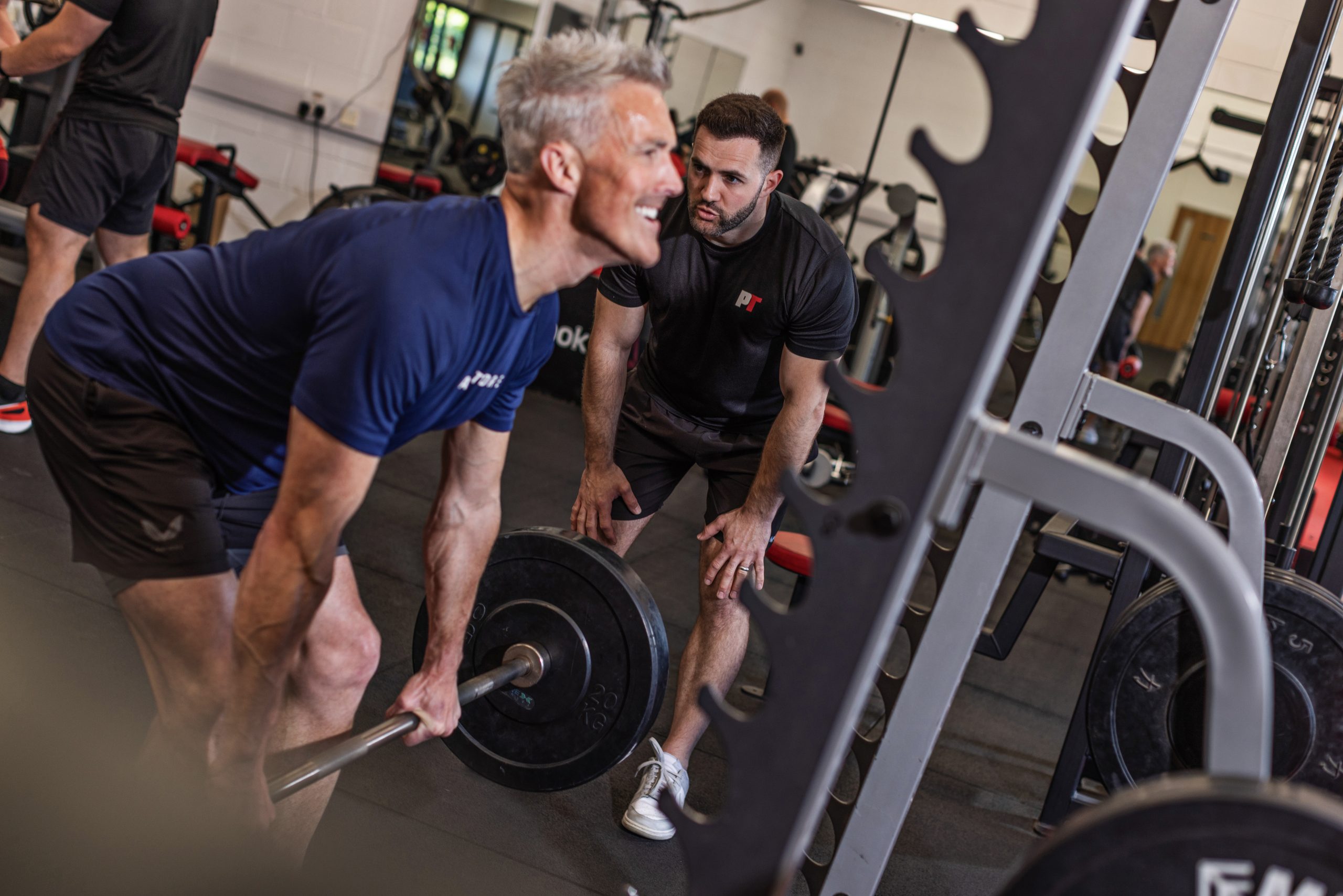
For many people, small group personal training offers the structure and guidance needed to apply progressive overload safely and effectively.
Final thoughts
Progressive overload is the foundation of long-term results.
You do not need to destroy yourself in every workout.
You simply need training that becomes gradually more effective over time.
That could mean more weight, more reps, better technique or greater consistency.
When this is combined with patience and structure, progress becomes far more predictable.
The people who get the best results are rarely doing magic workouts.
They are simply progressing well.